Cortland Bridge and Dolly
August 26, 2026
************************************
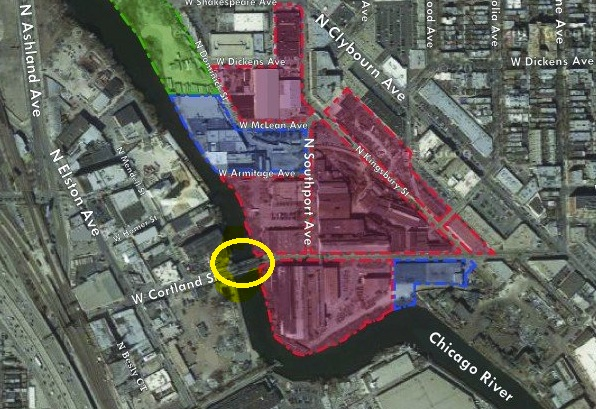
This doesn’t have much to do with markets, but the above picture highlights the Cortland Bridge in Chicago. On the east side, shaded in red was A. Finkl and Sons steel mill, right there west of Lincoln Park. Really cool to drive by in the early evening and see the red lava of molten steel. Other worldly. It was shuttered in 2015. That little bridge (40 meters) is still a heavily used thoroughfare. However, it closed to car traffic a year ago in September for a rehab project.
It was supposed to be a year-long project but is now expected to take years (partially due to historic preservation). YEARS. Chicago used to have the moniker. “The City That Works.” Not now. Maybe I am wrong, but in China this project would take less than six months? (but maybe wouldn’t last for 124 years…)
From WSJ:
Structural budget deficits, political disorder and ballooning payments on pensions and debt service have prompted three ratings firms to downgrade Chicago’s credit since January 2025—to levels two or three notches above junk
https://x.com/StuLoren/status/2091933379411263692
–Main feature of Tuesday’s market was continued bid in US treasuries, esp the long end. Data was weak, with Philly Fed Services at -10.6 vs expected +3.6. New Home Sales in the dirt at just 607k annual rate vs 620k expected. Consumer Confidence dipped back toward the COVID lows at just 89.4 vs 90.2 expected. Dick’s Sporting Goods dropped 30% on weak forward guidance (challenged consumer environment). Data remains mixed, with last week’s Philly Mfg and S&P PMI’s strong. A dump in oil prices was also a factor, with CLV6 -2.61 late at 82.40.
–On the SOFR strip every contract from reds through blues (years 2, 3 and 4) were up 5 to 6.5 bps. 2y yield fell 3.9 to 4.197%, with the thirty year down 5.1 bps to 5.179%. Implied vol fell across the board, with SOFR straddles mostly -1 to -1.5 bps. This morning CLV6 is tickling 80 (80.18, -2.18) but stocks and bonds are ignoring the signal with treasuries unch’d and ESU down slightly.
–Today brings 5y auction and PCE Prices, expected 0.1 with Core 0.2. YOY expected 3.6% from 3.7% last with Core 3.3% from 3.3%. Call me a crazy conspiracist, but in front of Jackson Hole and Warsh promising 2% inflation, I would take the UNDER on PCE price expectations. NVDA earnings post-bell.
–I just love the story about Lebron getting a $300 million loan against future earnings outside of basketball, from insurance companies. The amount of questionable insurance annuities investments in Dodgy vehicles is starting to pile up. For example:
https://x.com/EconomPic/status/2089843709655630003
–The financialization of the US has crossed the Rubicon. Ask yourself, what would Dolly Parton do? Elvis at one point wanted to buy her hit song, I Will Always Love You. Elvis’ mgr. Colonel Tom Parker phoned Dolly and said Elvis was going to perform it that weekend, offering to buy half the copyright. Dolly DECLINED! and eventually made a tremendous amount of money from Whitney Houston’s rendition.
But THIS is the Dolly Parton story that makes her a cultural icon:
“Two hundred million books, a man told me at a gas pump. Then, seeing the number had defeated me, he made it smaller and heavier at once. “She did it for her daddy,” he said. “He never got to read. So she made sure every child after him would.”
Bananas
July 18, 2026
****************************************************************
Remember this? It was an art installation by Italian artist Maurizio Cattelan. A banana taped to a wall with duct tape. 2019.

“The artwork made international headlines when a duplicate sold for a staggering $6.2 million at an auction in New York.”
From Wikipedia; Maurizio Cattelan is an Italian artist known for his tongue-in-cheek art, such as his 2016 creation America, a fully functional golden toilet.
Maurizio was ahead of his time, as these two conceptual pieces of art capture the Trump era perfectly. The one I want to focus on here though, is the banana.
Here’s a clip from a BBG article Friday. — President Donald Trump’s media company wants traders and investors to pay for real-time access to Truth Social posts from the social media platform’s “highest-ranking” accounts.
Just astoundingly tone-deaf. Grift doesn’t begin to capture it. I’m guessing the Truth Social brainstorm came together with news of the White House teleprompter guy making > $100k on bets prior to Trump speeches.
Hernando de Soto is a Peruvian economist. Again from Wiki: “He is known for his work on the informal economy and on the importance of business and property rights.” My recollection is that he is a big supporter of the types of institutions that make (made?) America great. Property rights and the legal framework to support both business and individuals. He felt that Peru needed to move in this direction, in conjunction with deregulation, to provide strong incentives for the economy to work. Fairly. What we used to call, ‘a level playing field’.
Peru might have been categorized in the ‘banana republic’ basket. Rather than strengthening institutions that form the bedrock of America, both parties seem to be racing to dismantle the integrity of markets and property rights. I don’t know how many ethics courses I have been required to take that stress, “If something even seems like it remotely might be construed as a conflict of interest, don’t do it.” The administration has thrown that concept against the wall. Bananas.
The fact that stocks took a stumble this week can be attributed to: 1) the renewed jump in oil as Iran hostilities heat up, 2) the chip meltdown 3) Fed officials jaw-boning about the need to contain inflation. I am going to throw in another factor, alluded to above. When the administration is front and center in demeaning fairness in markets, faith tends to disintegrate, dragging valuations down. This week, SPX fell 1.6% and NDX -4.1%.
Next FOMC July 29
Jackson Hole Symposium is 27-29 August
| 7/10/2026 | 7/17/2026 | chg | ||
| UST 2Y | 420.8 | 417.0 | -3.8 | |
| UST 5Y | 430.8 | 427.0 | -3.8 | |
| UST 10Y | 456.7 | 454.1 | -2.6 | |
| UST 30Y | 507.0 | 506.2 | -0.8 | |
| GERM 2Y | 264.5 | 278.2 | 13.7 | |
| GERM 10Y | 306.4 | 312.4 | 6.0 | |
| JPN 20Y | 370.6 | 359.1 | -11.5 | |
| CHINA 10Y | 173.1 | 173.2 | 0.1 | |
| SOFR U6/U7 | 15.5 | 16.0 | 0.5 | |
| SOFR U7/U8 | -13.0 | -11.5 | 1.5 | |
| SOFR U8/U9 | 0.5 | 0.5 | 0.0 | |
| EUR | 114.16 | 114.37 | 0.21 | |
| CRUDE (CLU6) | 71.34 | 81.78 | 10.44 | |
| SPX | 7575.39 | 7457.69 | -117.70 | -1.6% |
| VIX | 15.03 | 18.77 | 3.74 | |
| MOVE | 69.55 | 70.88 | 1.33 | |
Anchovies
July 5, 2026
************
NOTE TO READERS:
Due to compliance issues, I will not be publishing my daily/weekly notes on this site henceforth. I may publish articles like the one below, that are more for personal entertainment.
I began writing my notes as a way to organize my own thoughts. I never put my notes behind a paywall, because I personally am sick of having to subscribe to everything. I don’t like it, so I don’t do it, though in the future I might find it necessary to create a subscription for weekly pieces.
If you like my daily notes and are in the trading community, email me at alex.manzara@stonex.com and I can add you to my email list. I DO make my income from commissions, so I DO once in a while remind people that I can clear your business and or/execute listed interest rate options. I do NOT use personal information for any other purpose and I don’t spam out notices unrelated to market info… again, I don’t like that so I don’t do it.
Thanks, Alex (MNZ)
*********************************************************************************************
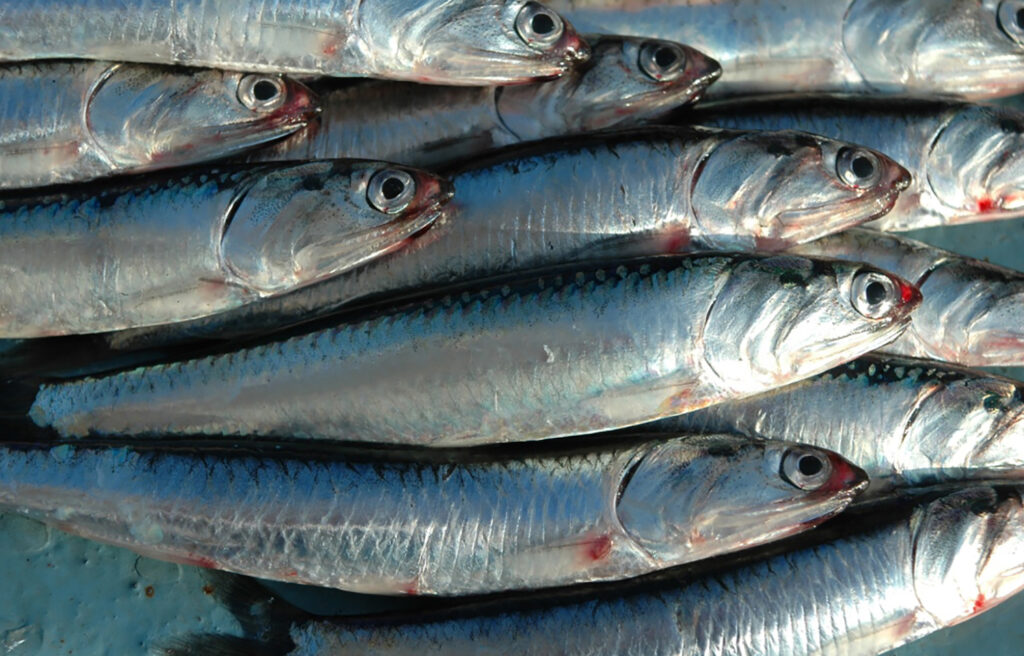
Last week, Bloomberg’s energy/opinion columnist Javier Blas wrote an article on anchovies. Mr Blas is a top-notch energy source, but I always enjoy the more colorful stories like this one and previous pieces on the price of olive oil. In any case, the stats in this article related to farm-fishing are quite surprising.
In 2010, I also wrote an article relating to anchovies, but mine was more of a trading-floor lore piece, which I reproduced (edited) below. But first, here are a couple of excerpts from the Bloomberg piece ‘Beyond Oil, This Is the Commodity to Watch Now’.
Due to El Nino:
Global production has plunged as much as 40% from a year ago; prices are up 80% over the same period to an all-time high. The commodity in question? The humble anchovy.
The anchovy sits at the bottom of a crucial supply chain that sustains the $500-billion-a-year global
aquaculture industry. Anchovies are the main ingredient in fishmeal, and without enough of it, global production of salmon, seabass, shrimp, oysters and other seafood will suffer, pushing
up supermarket prices.
With demand from the aquaculture industry still strong, the cost of fishmeal in the wholesale market has nearly doubled over the last year to an all-time high of $2,990 per metric ton in late June.
…today the world consumes more than half of its fish and seafood from farms, requiring a huge
fishmeal supply. At the same time, fish consumption per capita has also jumped, reaching 21.3 kilograms per year in 2024, up from 14.3 kilograms on average in the 1990s
The 2026 anchovy crisis is a reminder of the surprising ways in which the world is wired today, where a weather event in Peru pushes up fish costs in supermarkets in Europe and elsewhere. It’s a warning sign that El Nino will have significant impacts on global food prices — far greater than those from the war in Iran.
************************************************************************************
One of the great things about the trading floors is some of the market lore that is handed down…maybe a lot of it falls under the heading of ‘urban legend’…but I keep thinking about a story I heard about the O’Connor brothers making a fortune…probably in the 1970’s.
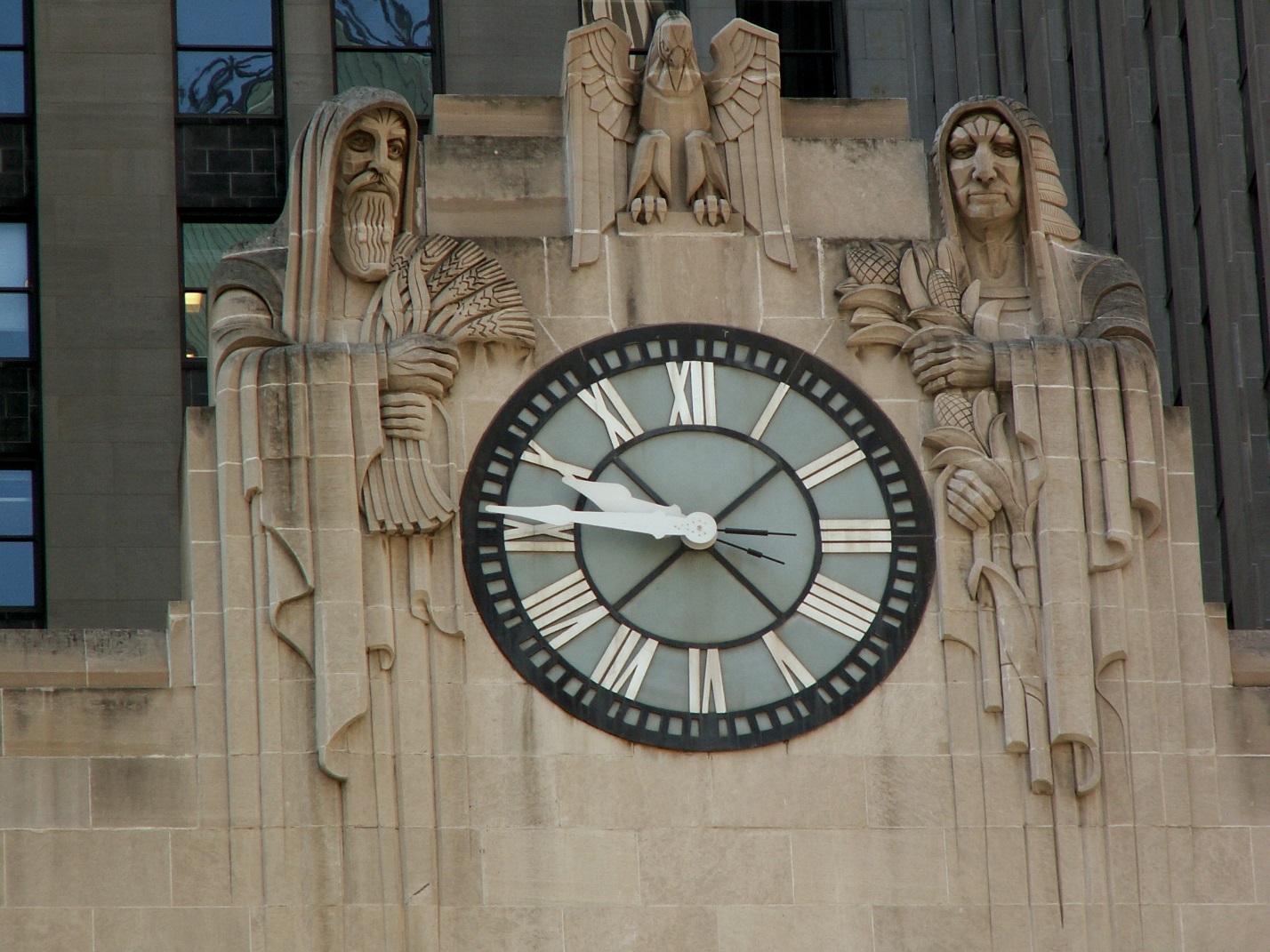
The Chicago Board of Trade building, which sits at the base of Lasalle Street on Jackson, is an art deco gem. Limestone façade with a clock in the center, flanked by huge bas-relief carvings of a Mesopotamian trader and American Indian holding sheaves of wheat and stalks of corn. Doesn’t take a genius to figure out where that money came from (the Mesopotamians!). Currently, the street on the east side of the CBOT is a mall, with the new (1997) concrete box trading floor across from the old building.
I recall walking up to the CBOT in the late 1980’s and seeing a black Lincoln limo turn off Jackson onto this side street and glide up to the curb. Out jumped one of the O’Connor brothers. Spry like a leprechaun, white hair, trimmed mustache, impeccably tailored suit. But what really struck me was the interior upholstery. Blue plaid, undoubtedly the tartan of his family’s county. I still smile when I think of that image.
I never knew the O’Connors. Their firm became an option trading powerhouse, eventually sold to Swiss Bank. Of course, living in Chicago I did know a bunch of other O’Connors. And Walshes. And Murphys. And O’Briens. Etc
In any event, the tale I heard, which I can attribute only to memory, is the following: The O’Connor brothers were visiting Peru. Why? I have no idea… And they kept hearing downbeat stories about the local economy and wondered why. It was due to a weather phenomenon, either la Nina or el Nino, I can’t remember which*… that had ruined the fishing industry for the season. The importance of this problem was that the fish in question, anchovies, are ordinarily hugely plentiful. The change in ocean current had diverted the catch far away from the South American coast. The fish was dried and ground and used for meal to feed cattle…critically important not only to Peru, but the entire South American economy. [At the time I doubt aquaculture was even a word]
So, the O’Connors placed orders to buy up all the soybean meal they could on the CBOT, and of course the market exploded. Hence the black limo.
*At the time I heard the original version, there wasn’t as much instantaneous information. Now I just looked up a couple of things online and realize it was el Nino, which creates warmer ocean surface temps on the western S American coast that reduces the anchovy population. And I further discovered it must have been the 1972-73 el Nino which virtually destroyed the Peruvian fishing industry.
https://www.nytimes.com/1973/01/28/archives/perus-day-of-reckoning.html
Of course, that was also the time of the oil crisis/OPEC embargo when all commodity prices shot up due to inflation. Soybeans went from around $3 bushel to $8 (and now only around $11.50, amazingly enough). From mid-1973 to early 1974, WTI went from $2 to $10. For all the caterwauling about recent energy prices, a similar move would have taken us to $300/bbl.
Again, I don’t know if this story is accurate or not. But I DO know what I saw!
*************************************************************************************
Monday: ISM Services and Waller
Tuesday: Trade and 3y auction. NATO summit begins
Wednesday: 10y auction, FOMC minutes, Cons Credit
Thursday: Existing Homes and Williams, 30y auction
Warsh in front of House Financial Services on Tuesday, July 14
Next FOMC July 29
Jackson Hole Symposium is 27-29 August
Disinflationary Bounce
June 28, 2026 – Weekly Comment
****************************
The week featured lower yields in the context of a slight bounce in the curve, as inflation proxies fell. CLQ6 (WTI) settled at a new recent low 69.23, down 30% from May’s high. One-year CL calendar U6/U7 settled 2.93, from a high mark over 19.00 in May. Ten year breakeven, treasury minus tip yield, ended at a new low of 221 bps, nearing the April 2025 tariff low. In May the breakeven hit 252 bps. Truflation reading for June is only 1.93%. Zillow yoy rent index as of May was just 2.03% though CPI rent for May was 3.23%. On Thursday, PCE Price index yoy was as expected at +4.1%, but the market is tentatively looking past current inflation, and is focusing on forward measures.
https://en.macromicro.me/collections/5/us-price-relative/49740/us-cpi-rent-zillow-rent-yoy
I believe there is a lurking suspicion that capital for AI is becoming more circumspect about potential rewards. The lower end consumer, with paltry wage gains, is not driving price increases. The high end consumer, with strong capital gains so far, has driven consumption and inflation. If the confidence level in AI falters and capital runs dry, the impact will not only be on capex, but also high-end consumption.
I’m not sure how accurate this site is, but https://www.numerator.com/prime-day/ tracks Amazon’s Prime Days.
The average Prime Day 2026 order size was $47.66, down from $53.34 in last year’s Prime Day early read. Nearly two-thirds (63%) of households shopping the event placed two or more separate orders, bringing average household spend to approximately $143.45, down from $156.37 last year.
Lower prices, lower total spend in a supposedly inflationary economy.
Oracle 5y CDS last is 172 bps, nearing the March high of 198, up from 37 bps one year ago. By contrast, MSFT 5y CDS is 43, but that’s up from 20 bps a year ago. ORCL stock ticked over 250 on June 1, now just below 150.
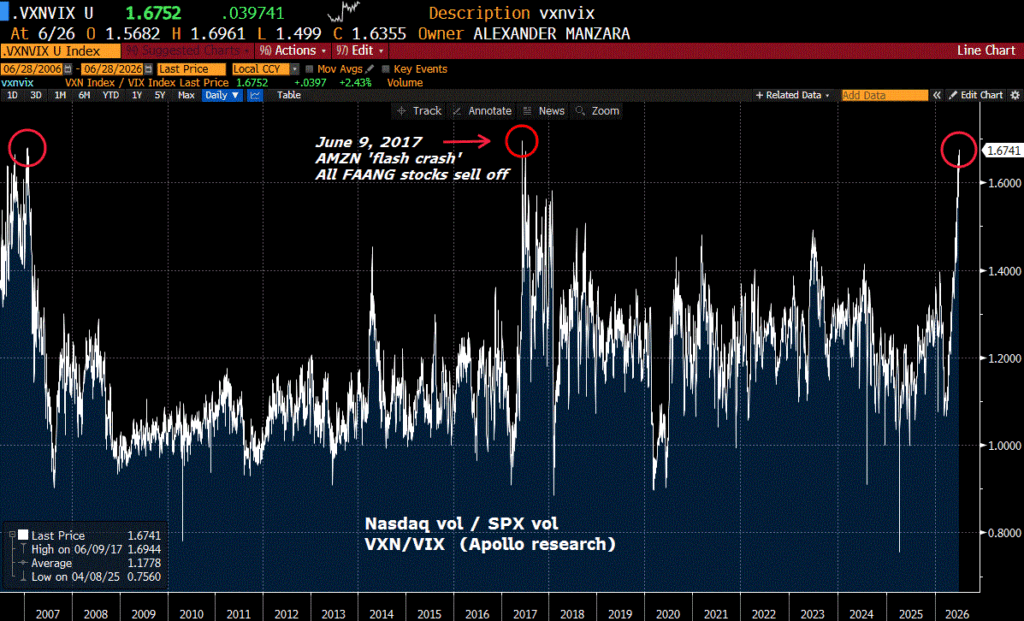
Last week on a daily note I posted the following chart, attributed to Apollo, VXN/VIX. Nasdaq vol / SPX vol…a measure of possible stress in the hi-tech arena. Current measure is 1.67, high since late 2002 (not pictured on chart). The absolute high in February 2001 was 2.73, so we’re not yet close, but gaining.
The US 5y note was the leader of the week, falling 10 bps to 4.128%. That’s exactly 50 bps above the current Fed Effective rate of 3.63%. Tens eased 7.7 bbps to 4.372% and thirties fell 3.6 to 4.864%. On the SOFR strip, the lowest near contract remains SFRH7 at 9599 or 4.01%, up 13.5 on the week from 9585.5. Every SOFR contract in the two year stretch from March ’28 to March’30 is between 9622.5 and 9629 or around 3.75%, the upper end of the current FF range (3.5 to 3.75%). As of the end of the week, futures prices simply aren’t pricing for a series of inflation-fighting hikes. Rather, they are taking a wait-and-see attitude. That could, of course change, as the tenuous cease-fire with Iran seems to be at risk of collapsing over the weekend.
Going into quarter/half end, a piece of Fed research is salient. ‘Decomposing Hedge Funds’ U.S. Treasury Exposures’ by PJ Monin. Of course, portfolio rebalancing has likely also driven some of the moves in the past week.
https://www.federalreserve.gov/econres/notes/feds-notes/decomposing-hedge-funds-u-s-treasury-exposures-20260622.html
“We find that highly leveraged arbitrage strategies dominate hedge funds’ Treasury positioning. The Treasury cash-futures basis trade has grown to approximately $830 billion as of September 2025, about double its previous peak in early 2020 and representing 35% of hedge funds’ total long Treasury exposures. The swap spread arbitrage trade reached approximately $305 billion (13%) by September 2025, though it experienced notable stress following the April 2025 tariff announcements when about $60 billion unwound rapidly before recovering within months. Beyond these directly estimated arbitrage trades, we identify substantial positioning in broader trade categories: maturity-matched trades (including on-the-run/off-the-run arbitrage and other strategies with approximately equal durations) totaling $395 billion (17%), and steepener-like trades totaling $375 billion (16%).”
Charts in this paper show an explosion in basis trades since late 2022, early 2023. Could lead to funding tightness this week.
News this week includes Conf Board Consumer Confidence and JOLTS on Tuesday. Former expected 94.6 from last of 93.1. (Confidence remains weak). JOLTS had a big bounce last week to 7618, but is expected to revert lower to 7288. For the past two years JOLTS has been at a relatively low level, ranging from 6550 to 7618.
Wednesday includes ADP (exp 119k) and ISM Mfg at 53.9. Payrolls on Thursday expected 115k with an Unemployment rate of 4.3%.
Warsh speaks at the ECB Forum on Central Banking in Sintra, Portugal on Wednesday (with Lagarde, Bailey and Macklem).
Future: Next FOMC July 29
Jackson Hole Symposium is 27-29 August
| 6/18/2026 | 6/26/2026 | chg | ||
| UST 2Y | 418.1 | 408.8 | -9.3 | |
| UST 5Y | 422.8 | 412.8 | -10.0 | |
| UST 10Y | 444.9 | 437.2 | -7.7 | |
| UST 30Y | 490.0 | 486.4 | -3.6 | |
| GERM 2Y | 260.4 | 251.5 | -8.9 | |
| GERM 10Y | 292.8 | 285.0 | -7.8 | |
| JPN 20Y | 350.5 | 351.8 | 1.3 | |
| CHINA 10Y | 172.5 | 172.4 | -0.1 | |
| SOFR U6/U7 | 10.0 | 5.5 | -4.5 | |
| SOFR U7/U8 | -20.5 | -19.5 | 1.0 | |
| SOFR U8/U9 | -0.5 | -0.5 | 0.0 | |
| EUR | 114.58 | 113.84 | -0.74 | |
| CRUDE (CLQ6) | 75.88 | 69.23 | -6.65 | |
| SPX | 7500.58 | 7354.02 | -146.56 | -2.0% |
| VIX | 16.40 | 18.41 | 2.01 | |
| MOVE | 65.39 | 66.79 | 1.40 | |
Rate futures holding a bid going into today’s July treasury opt expiry
June 26, 2026
***********
–After a blazing upside move in chips following MU’s stellar earnings report, we’re seeing a bit of a pullback this morning with KOSPI down around 6%, and MU down 5% pre-open with SNDK in a similar decline. AAPL fell 6.1% yesterday wiping out about $240b in market cap as an announcement of product price increases didn’t fly. OpenAI said to be delaying IPO into 2027. Another interesting note is that CME stock has cratered 31% from the high in March, with latest weakness coming from Kalshi, and a lawsuit being filed by CME against the CFTC’s approval of perpetual futures listed by Kalshi.
–Yesterday featured a pop in interest rate futures as PCE data came out essentially as expected. Again, forward measures on inflation are likely being marked down due to oil’s collapse. One surprising note was a revision in Q1 Pers Consumption from +1.4 to just +0.5%. 2y yield eased 1.4 to 4.125% with tens down nearly 1 bp to 4.392%. Red SOFR contracts +2.25 to an average of 9614.38, while greens were +1.25% to 9624.25 or around 3.75%, right at the upper end of the current FF target. As of this note, reds and greens are +3.5, just above yesterday’s highs.
–Payrolls released Thursday with the shortened holiday week, NFP expected 115k.
MU post-close earnings rescues stocks
June 25, 2026
***********
–PCE prices today with yoy expected 4.1 from 3.8 and Core 3.4 from 3.3. Perhaps not as important given oil’s slide, with WTI now sub-70 and dollar index making new highs. 2/10 treasury spread closed at a new recent low 26.5, not seen since March 2025, indicative of what might be framed as a tight Fed. 10y treasury-tip breakeven edged to a new low of 219.7. Spot gold below 4000, down 29% from January’s high print 5595. Even copper has had a modest pullback from the highs.
–2y yield ended yesterday at 4.135% down 6.1 bps (at futures settle), while tens fell 9.3 to just 4.40%. Near SOFR contracts are hesitant to price any near term easing with the lowest contract SFRH7 up 6.5 at 9592.5 or 4.075, still 44.5 bps above the current Fed Effective of 3.63; nearly 2 HIKES priced. However, greens and blues were up 10-10.5. Peak contract, now SFRH29, settled 9623.5, still at a higher yield than EFFR. What is interesting is that the peak contract is nearly three years forward…it had been more like 2 years forward. To me, the easiest trade on the board is to play for the peak contract moving forward in time (Not a recommendation). My personal view is that the Fed will ease at least twice this year, starting in Sept or Oct. (Predicated on a bubble pop; note that Mag 7 are all significantly below year’s highs except for AAPL). Yesterday’s New Home Sales were dismal at 580k, apart from January at 576, the lowest level since late 2022.
–The day ended with MU shattering expectations and ramping after-hours prices in stock indexes to yesterday’s highs, or just above in NQU. Equity strength has barely dented TYU price, now 109-30, in front of today’s 7yr auction. Talk of heavy rebalancing for quarter end out of stocks into bonds. (How about back into gold??). As a side note SPX/XAU has been straight up since March (as gold had peaked). Now 1.845, recent high in middle of 2025 was 1.943 which I believe will be huge resistance.
–Heavy seismic activity in last 24 hours with a huge 7.5 quake in Venezuela leading to high casualties. Also a 6.9 in Kuji Japan, 5.6 in Redwood Valley CA and 5.4 in Papua New Guinea
Micron earnings this afternoon, on the heels of yesterday’s rout
June 24, 2026
***********
–Curve steepened yesterday with a solid front-end bid as stocks slid. 2y yield down 4 bps to 4.19% (good auction yesterday) while tens fell 1.6 bps to 4.493%. SPX down 1.4% while NDX dropped 3.3%. Island (possible blow-off) tops in SNDK and MU, the latter of which reports this afternoon with EPS expected 20.34. MU -13.2% yest. SK Hynix expected to list a US ADR, raising $29b. (constant new funding demands in the tech world).
–On the SOFR strip near contracts led with H7 thru Z7 +5 on the day (9586, 9587.5, 9593.5, 9601). SFRH7 still the lowest near contract. H7, +5, H8 +4.5, H9 +2.5 and H0 +1.0. Not exactly a hard flight-to-quality bid, but a nod of acknowledgement. SOFR contracts out to 4 years remain clustered between 3.875% and 4.125%.
–With July treasury options falling off the board on Friday; large covered buys of TYQ 110c and 110.5c. TYQ 110c 22 paid 40k vs 109-14. 20 settle vs 109-12s, open int +48k to 138k. TYQ6 110.5c 14 paid 50k covered 109-15+, 12s with OI +35k to 130k.
–Morgan Stanley, the latest to gate redemptions on a private credit fund.
–News today includes New Home Sales, expected +3.2%. PCE prices tomorrow.
On July 14, Warsh expected to testify to House Financial Services Committee. Expect hard hitting questions on the reflecting pool.
From Ed Zitron:
That’s because their actual relevance is, in and of itself, symbolic. OpenAI and Anthropic combined to less than $20 billion in annual revenue in 2025 representing 89% of all AI startup revenues, and spent at least $30 billion on compute on Microsoft Azure, Google Cloud and Amazon Web Services. Their services are sold using the very same cargo cult mentality that got us into this mess — organizations adopting AI at scale and demanding that people use it because “AI is so powerful,” …
Greenspan 2000 (but Kospi right now)
June 23, 2026
*************
–Near SOFR contracts made new lows for the move, with the lowest contract being SFRH7 at at price of 9581, down 4.5 on the day to a yield of 4.19. Red contracts were hit hardest, with Z7, H8 and M8 down 8.5 to prices of 9596, 9602.5 and 9606. Even though oil was lower on the day, rate hike fears are dominant. Of course, there are also auctions this week of 2, 5 and 7 yr notes.
–2y note ended +5.5 bps to 4.23% and 10s were up 6 bps to 4.509%.
–Just a quick word about stocks/semis: Example is Sandisk, SNDK which closed nearly 2274, up 89 on the day. Friday expiration 2500 calls are over 70!! I guess there’s some mathematical sense to it: On June 5, the stock was 1559. Now, ten sessions later it’s up 715 points. So that’s an average of 71 points per day. Four days until expiration is 284 added onto current price which delivers a mark of 2558. So right around breakeven for the call.
[I wrote that yesterday. Today, the picture has, ahem, changed. Kospi down 10%. Semis looking like a classic island top. The press is delighting in the pullback of SpaceX]
***************************
In commemorating Alan Greenspan, I was looking for a specific quote that I was unable to track it down – basically a snippet where he said long term interest rates thru the arc of time have been around 3 to 6%. One of his most famous lines referred to “irrational exuberance” (from 1996). However, almost all of Greenspan’s speeches are extremely informative. I am just including a few excerpts of this one, from March 2000, which obviously couldn’t be known at the time, but was the very top of dotcom. Worth reading all, but I have highlighted salient sentences. Note that ‘irrational exuberance’ was in 1996, but at the absolute highs.in 2000 there’s NO WARNING AT ALL. Even G’span had capitulated.
These excerpts could easily transfer to today. History rhymes.
Remarks by Chairman Alan Greenspan
Economic challenges in the new century [Economic challenges related to AI]
Before the Annual Conference of the National Community Reinvestment Coalition, Washington, D.C.
March 22, 2000
https://www.federalreserve.gov/boarddocs/speeches/2000/20000322.htm
And because technological change has spawned so many opportunities for businesses to expand the range and value of their goods and services, the introduction of new efficiencies has not led to higher unemployment. Rather, the recent period of technological innovation has created a vibrant economy in which opportunities for jobs and new businesses have expanded, enhancing the living standards of a large majority of Americans.
How did we arrive at such a fascinating and, to some, unsettling point in history? While the process of innovation, of course, is never-ending, the development of the transistor after World War II appears in retrospect to have initiated a special wave of innovative synergies. It brought us the microprocessor, the computer, satellites, and the joining of laser and fiber-optic technologies. By the 1990s, these and a number of lesser but critical innovations had, in turn, fostered an enormous new capacity to capture, analyze, and disseminate information. It is the growing use of information technology throughout the economy that makes the current period unique.
Much attention is focused on the role of corporate giants in fostering innovation, but we would be foolish to understate the extent to which America’s innovative energy draws, and will continue to draw, from the interaction of both large and small businesses. Nowhere in the world are the synergies of small and large businesses operating side by side in a dynamic and competitive market economy more apparent than in this country. Of course, the surging growth of young high-tech firms and the flashy presence of new Internet businesses capture the most public attention.
The most common complaints include the difficulty of finding qualified workers in the midst of strong competing demands for labor.
Overall, our evolving economic and financial systems have been highly successful in promoting growth and higher standards of living for the majority of our citizens. But we need to reach further to engage those who have not been able to participate. One way is through the education and training of our workforce–that is, enhancing our stock of “human capital,” which is a necessary complement to our ever-changing physical capital. A major consequence of the fast-paced technological change of recent years and the growth of the conceptual emphasis of our nation’s output has been to increase the demand for skilled workers.
Another consequence of rapid economic and technological change that needs to be addressed is a higher level of worker insecurity,which is the result, I suspect, of fears of potential job skill obsolescence.
As one might expect, greater worker insecurities are also creating political pressures to reduce the fierce global competition that has emerged in the wake of our 1990s technology boom.
Of course, we need also to consider trends in wealth, which, more fundamentally than earnings or income, represent a measure of the ability of households to consume. The Federal Reserve’s Survey of Consumer Finances indicates that the median real net worth of families increased 17-1/2 percent between 1995 and 1998. As one might expect, the rising stock market coupled with the spreading ownership of equities was an important factor. However, even in the face of the strong aggregate trend, median net worth declined over this period for families with incomes below $25,000, and medians for non-whites and Hispanics were little changed.
We are experiencing an extraordinary period of economic innovation. At the policy level, we must work to configure monetary policies that will foster a continuation of solid growth and low inflation. Beyond this primary mandate, we at the Federal Reserve are also responding to the challenge of ensuring that all communities can fully participate in our growing prosperity.
Stress
June 22, 2026
*************
–I recreated a chart posted on X, attributed to Apollo. VXN/VIX *nasdaq vol/spx vol. I added notation for previous high in June 2017 (tech flash-crash). I had seen demand for tech name CDS as banks protect themselves from lending to AI names, but this is a more elegant way to track stress.
In 2007 the spike resolved with everything going lower, but in 2017, equity indexes were higher in about a month. This time????
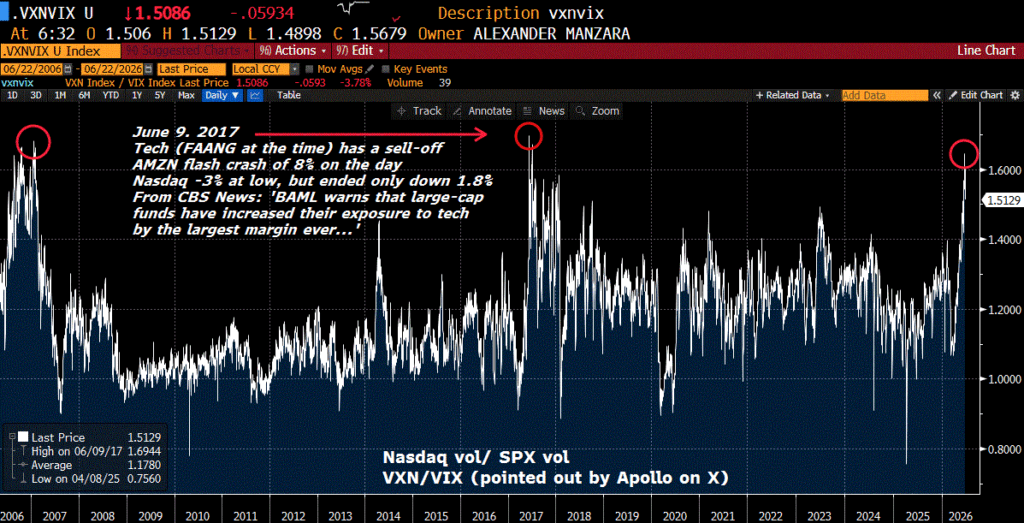
–Link below from 2017:
https://www.cbsnews.com/news/tech-stocks-fall-facebook-apple-amazon-netflix-google-faang-fang-nasdaq
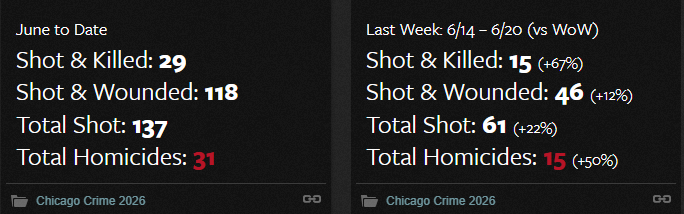
Once in a while I add this link with crime stats from Chicago. Total US troops killed in Iran war 13. June in Chicago (so far) 31 homicides.
Popping Balloons
June 20, 2026 – Weekly comment
***************************
This is Larry’s Lawn Chair. Decidedly pre-AI. Larry, an aviation buff, decided to scratch his itch to fly by buying 42 weather balloons, attaching them to this sturdy chair, which he bought on sale from Sears, and taking off on July 2, 1982. [links to Larry at bottom. If you have time the David Letterman interview which also features the Godfather of Soul James Brown is pretty fun]
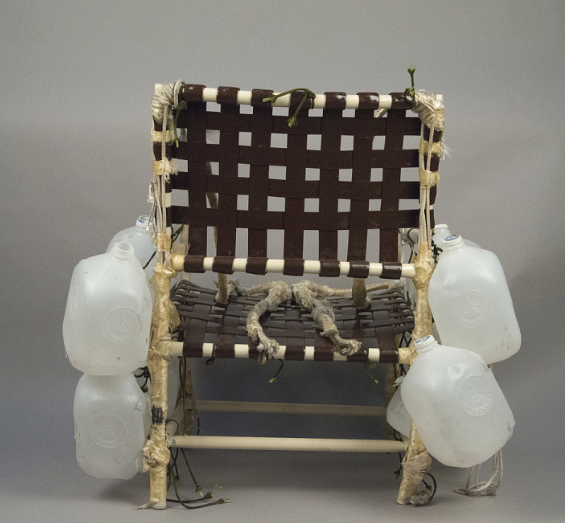
Recalling a time as a boy when he saw weather balloons strung up at an Army-Navy surplus store, Larry devised a plan. At 11 a.m. on July 2, 1982, he would take flight from the backyard of his girlfriend’s home in San Pedro, California, by tying 42 8-foot helium-filled weather balloons, tiered into four layers, to a Sears-purchased aluminum lawn chair angled back at a 45-degree angle, using gallon jugs of water as ballast. Larry called his self-made aircraft “Inspiration I” and stocked it with sandwiches, cold beer, a CB radio, altimeter, camera and a pellet gun to shoot out balloons for controlled descent. Having learned to skydive as a precaution, he donned a parachute and climbed aboard his chair from a rooftop. The chair was tethered to his Jeep using three lines. Larry claimed in a later interview that his intention was to remain tethered at 100 feet for an hour and contact the FAA and a few airports prior to launch. By his calculations, once the lines were cut, he would lift up a few hundred feet, and the winds would slowly drift him east toward the Mojave Desert. The flight cost him approximately $4,000. He figured he would spend a couple of hours enjoying his snacks, sipping his beverages, and snapping a few photos before finally shooting out enough balloons to make a gentle, safe descent.
https://planeandpilotmag.com/lawn-chair-larry
From Google:
The Takeoff: Intended only to hover a few dozen feet above his yard, the anchor line unexpectedly snapped, launching him straight into the sky. He quickly shot up to 16,000 feet, entering the controlled airspace around LAX.
The Flight & Landing: Commercial pilots reported seeing a man in a lawn chair to air traffic control. [“This is TWA 231, level at 16,000 feet,” the pilot is reported to have radioed to air traffic controllers. “We have a man in a chair attached to balloons in our ten-o’clock position, range five miles.”] Walters safely descended by popping balloons with his pellet gun, [after shooting out several balloons, Larry placed the gun in his lap to check his altimeter, and dropped the gun] though his descent ended when the balloon strings snagged on power lines in Long Beach, triggering a 20-minute blackout. [1, 2]
Sometimes, really great plans are thwarted by something NO ONE could have predicted, like a snapped line. Of course, in this case, the result was an epic tale of lore.
“It was something I had to do,” Walters told The Los Angeles Times later. “I had this dream for 20 years, and if I hadn’t done it, I would have ended up in the funny farm.”
Our new Fed Chair Kevin Warsh seems to share a few parallel strands with our hero Larry. Warsh was on the Fed Board during the GFC, but resigned in 2011 due to differences in policy decisions. Not quite 20 years ago, but it seems Warsh had an itch to be Fed Chair ever since.
Warsh has the lawn chair, the pellet gun, and he certainly is going to need a couple of beers. With inflation at risk of becoming untethered, as things sometimes do, his goal is to descend back to price stablity without the unemployment rate and/or President Trump tangling up his touch-down. Not quite the same joie de vivre as ensconced in Larry’s mission, but I wish him bonne chance. Of couse, Larry chased his dream on a shoestring, with his ‘ground crew’ consisting of his girlfiend, who bought the now-in-short-supply helium and another friend who shot video. (It was a GREAT time to be alive in the 80’s). Warsh, on the other hand, has a whole herd of cats as ‘stakeholders’ some of whom can’t wait to cut the lines.
Last week I wrote this:
Warsh’s first FOMC as Chair is Wednesday. Several Fed members have recently said the Fed may need to be more restrictive given persistent inflation (Logan, Hammack, Kashkari…). What should Warsh do? My guess is that he will shift the balance of risks toward inflation without changing rates. Talk tough. Forward guidance in all but name, which would likely pressure the curve further and may cause long rates to decline.
Finally something right!
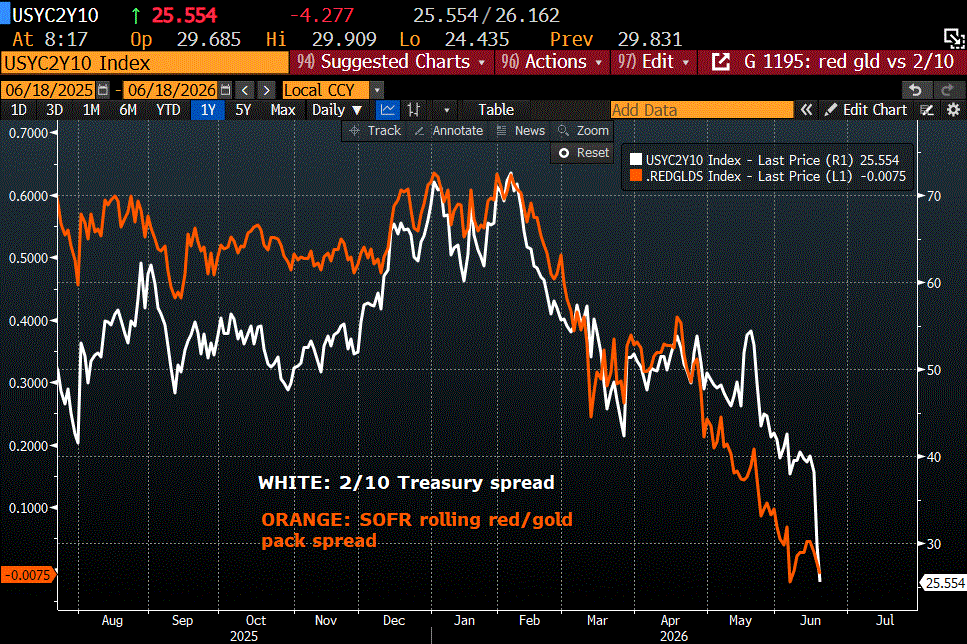
In any case, the market took to heart Warsh’s hawkish message and vow to return to price stability. Curves imploded. Chart above is red/gold SOFR pack spread (2nd yr vs 5th yr forward) overlaid with 2/10 treasury spread. Since the beginning of Feb, red/gold SOFR pack spread has gone from 72 bps to zero. It settled +1.625 bps with the red pack 9606.5 and gold pack 9604.875. 2/10 is now 26; high in Feb was over 60. The 4% level has sort of been a cap with respect to the SOFR strip, although the weakest contract, now SFRH7, settled at a new low 9585.5 (4.145%). So, initially the surge in oil related to Iran hostilities simply removed forward odds of easing. But recent inflation data and Warsh accentuated the trend towards actual hikes. Note as well that ten year breakeven (treasury minus tip yield) ended Thursday at a new recent low 226 bps from a high of 252 exactly one month ago. For the past three years, this breakeven has ranged from 200 to 250 bps and is now in the middle. If Warsh could attain an inflation level close to this longer-term measure of inflation expectations it would be a smashing success! The question is, what else gets smashed in collateral damage?
Step number one, which was already on its way, shoot out the oil balloon. However, to really have an impact, the Fed has to shoot out the semi boom, which is in direct conflict with Trump. I recall having a friend who was long a LOT of dot com stuff in 1999. I told him I was uncomfortable with that because the Fed was hiking. And I will never forget his response: “You don’t get it. These companies have no debt. Rate increases don’t affect them.” Well, it’s a different story now.
Here’s a Warsh quote in response to a question from Colby Smith:
If I look at the housing markets as one example, Fed policy isn’t the single determinant of the state of the housing market. But broadly, I would say Fed policy appears to be somewhat restrictive. I would have a hard time managing to say those words if I were to see what’s happening in financial markets. So, I’d say it’s uneven. That’s perhaps a function of different transmission mechanisms of monetary policy, whether monetary policy is coming from our interest rate tool or our balance sheet tool.
I can’t help but think back to 2018 when Powell was attempting to ‘normalize’ rates. The Fed used BOTH the interest rate tool and the balance sheet tool to tighten. In Dec of 2017 the Fed hiked 25 bps to 1.25/1.50. In 2018, quarter point hikes occurred in March, June and Sept of 2018. In March, a hike to 1.5/1.75 and an increase in QT from $20b to $30b per month. CPI was 2.2%. In June, a hike to 1.5/1.75. QT from $30 to $40b per month. CPI ~2.5%. In Sept, a hike to 1.75/2.0. QT from $40 to $50b per month. CPI ~2.3%. Throughout this period SPX rallied. The breaking point came in the beginning of October, shortly after Powell’s Oct 3 comment: “We may go past neutral. But we’re a long way from neutral at this point, probably.” SPX sold off 20% from then until late December. The administration was startled. Treas Sec’y Mnuchin held an emergency call with major banks in December to confirm ample liquidity. From December forward, almost every SOFR option trade was predicated on easing, which started in July 2019.
It’s no secret that Warsh thinks the Fed’s balance sheet is too large. Will a more restrictive policy come from rate hikes or the balance sheet? While the lowest SOFR contract, SFRH7 ended at a new low of 9585.5 (4.145%) on Thursday and traded to 9582 on Friday, which is just over a half percent above current EFFR and SOFRRATE, the forward SOFR one-year calendars lean towards ease. For example, SFRH7/SFRH8 settled at -25.5 (9585.5/9611). The current mkt signal, if that’s what the Fed is going to be watching, indicates the economy won’t be able to handle even modest rate hikes from here and/or that inflation will be receding. However the AI ‘bubble’ is likely driving high-end consumption and with it, goods and services inflation. It’s a hard needle to thread.
Warsh:
When we deliver on our price stability objectives – which we will – the American people will feel as though the hardships that they’ve been living through in part because of inflation in the last five years are in the rear-view mirror, and that credibility will have dividends across what we do.
If the Fed quickly delivers on price stability at the expense of stock prices, the American people will panic, Fed credibility be damned.
Waller speech Monday morning. Trump threatens to bomb Iran again, Monday thru Thursday. PCE prices on Thursday (Core yoy expected 3.3, same as last). Williams speaks as well. 2, 5, 7 year auctions start Tuesday.
OTHER THOUGHTS / TRADES
Sept treasury options expire 21-August. Fed’s Jackson Hole Symposium is 27-29 August. Market vulnerabilities appear to be building which I think will spark a bid for TY calls over puts at some point. Rolling TY contract low in Jan of 2025 was 107-06 and low in this calendar year, on May 19 was 108-18. MOVE index declined this week to 65.39 as Warsh’s hawkish tone flattened the curve. Way too low and a stark contrast to vol in SOFR contracts which climbed immediately after Warsh. For example, SFRU6 9625^ was 14/15 before the Fed when the contract was 9624, but on Thursday with a settle of 9606, the 9606.25 straddle settled 22.75. By contrast, from Tuesday to Thursday the TYU6 atm straddle was unch’d at 1’44. (Tuesday 110^ vs 109-30 was 1’44 and on Thursday 109.5^ vs 109-20 was 1’44).
Week before last, an interesting large trade on Friday 6/12 was a buy of 90k USN 111/110ps for 10. With the rally to 113-12, this sprd settled at just 1. Undeterred, on Friday there was a buyer of 30k USN 113/112ps which settled 13 vs 113-12 on Thursday. Not sure if these options traded Friday, but in the shortened session USU fell to 112-25. July options expire this Friday, 6/26.
| 6/12/2026 | 6/18/2026 | chg | ||
| UST 2Y | 408.3 | 417.5 | 9.2 | wi 418.1 |
| UST 5Y | 421.1 | 422.4 | 1.3 | wi 422.8 |
| UST 10Y | 448.5 | 444.9 | -3.6 | |
| UST 30Y | 497.2 | 490.0 | -7.2 | |
| GERM 2Y | 261.5 | 260.4 | -1.1 | |
| GERM 10Y | 299.4 | 292.8 | -6.6 | |
| JPN 20Y | 352.6 | 350.5 | -2.1 | |
| CHINA 10Y | 174.1 | 172.5 | -1.6 | |
| SOFR U6/U7 | 22.0 | 10.0 | -12.0 | |
| SOFR U7/U8 | -11.0 | -20.5 | -9.5 | |
| SOFR U8/U9 | 2.0 | -0.5 | -2.5 | |
| EUR | 115.68 | 114.6 | -1.10 | |
| CRUDE (CLQ6) | 83.35 | 75.9 | -7.47 | |
| SPX | 7431.46 | 7500.58 | 69.12 | 0.9% |
| VIX | 17.68 | 16.40 | -1.28 | |
| MOVE | 69.36 | 65.39 | -3.97 | |