RBI hikes 50. Yen at new low
June 8, 2022
–Yields fell yesterday, reversing much of Monday’s rise. Tens down 6.4 bps to 2.97% in front of today’s 10y auction. The curve was flatter; in euro$’s reds +3, greens +4.5, blues +7.75 and golds +9.125.
–Today’s activity so far includes a 50 bp repo rate increase by India’s central bank. New low in yen at 133.80. Turkish lira nearing its spike low at the end of last year, now 17.15.
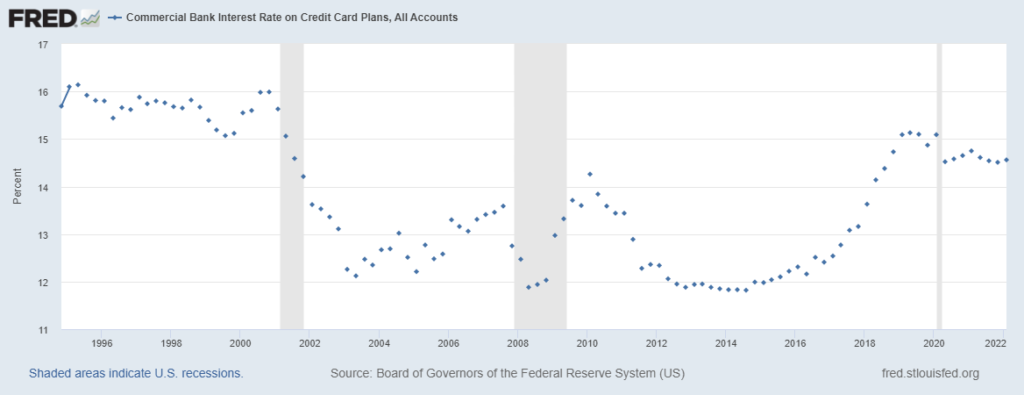
–A couple of indicators were released yesterday, Atlanta Fed’s GDP for Q2 at 0.9, down from 2.5 in mid-May. Also, consumer credit for April, which came in at up $38b, while March was revised down from a gargantuan $52b to $47b. These are big numbers, but consider that revolving credit was 1.017T in 2017, and now it’s 1.103T, a change of only $86 billion or 8.5% OVER 5 YEARS. The big blaring headline is that revolving credit was up at a 19.6% annualized rate. Even so, credit card debt isn’t really the issue, though the recent surge probably indicates consumer stress…it’s non-revolving for cars and school loans. What to do if one thinks education loans will be forgiven? Anyway, non-revolving sits at $3.463T, about 23% higher than 2017 at $2.814. Chart attached is credit card rates, now at 14.5%…never got much below 12%.
https://www.federalreserve.gov/releases/g19/current/default.htm
–July crude oil is hanging right near $120 bbl. I paid $6/gallon for regular gasoline yesterday afternoon. E-mail received from CME yesterday indicates a change in margins for energy products effective June 8 “to ensure adequate collateral coverage”. Squeezing out the weak players before something like the nickel market happens. July NatGas is 9.39 this morning.
–In eurodollar options some large conversions occurred. Example, approx 100k EDZ2 9750 vs futures at 9750, paid 0.5 for call. Open interest fell 100k in the put and 65k in futures. Cleaning up positions prior to quarter end.
Global tightness
June 7, 2022
–RBA hiked by more than expected 50 bps to 0.85%. Yen continues to make new lows, now at 132.69 having been 115 at the beginning of March. This morning bitcoin is back under 30k. This is the second recent failure; on May 31 it rallied to 32k and looked like a breakout from the long sideways bottom, but the very next day the move was reversed. Same thing yesterday: a feeble move nearing the May 31 high, and complete reversal today. Bearish.
–US equity futures also reversed from yesterday’s early morning highs and are lower this morning. Yields moved higher through the day and the curve steepened, with auctions beginning: 3s today followed by tens and thirties Wednesday and Thursday. The two year rose 6.3 to 2.73% while tens jumped 8 to 3.035%. On the euro$ strip, greens were weakest, with the pack down 11.375. As June expiration approaches, June’22/June’23 one-year calendars are all at recent highs, with euribor close to 200: EDM2/M3 178. ERM2/M3 198. SFIM2/M3 (sonia) 147.5. October Fed Funds settled 9773.0 or 227 bps. Current Fed Effective is 83. If the Fed hikes 50 at each of the three meetings prior to October, then Fed Eff should be 233 or a price of 9767.0. FFV2 is just 6 bps shy of that projection.
–Consumer Credit this afternoon expected $35.0b for April vs the March whopper of $52.4b. A sign of underlying consumer confidence, or desperation? Here’s some concrete and useful analysis, a bit different from the normal “can’t time the market, just hang on” stuff:
“There is a fire narrative, and that fire narrative is inflation. And then there is a bit of an ice narrative, that recession talk, hard landing or soft landing,” [Tom Pick of Morgan Stanley] said. “We’ll have these periods where it feels awfully fiery, and other periods where it feels icy, and clients need to navigate around that.” Huh? Thanks…I guess
Auctions capped by CPI on Friday
June 6, 2022
–Slightly better than expected jobs number (NFP 390k, rate 3.6%) sent yields higher and stocks lower. Tens up 3.8bps to 2.955%. SPX fell 1.6%. The curve flattened with a slight new recent low in reds to greens (2nd to 3rd year) at -27.125 (continued reaction to Brainard’s no pause in Sept). The low for this spread was in the beginning of April at -35.875. 5/30 ended at positive 15.2, though the low of the year on 4/1 was negative 12. EDM’23 remains the cheapest contract on the strip at 9652, and it’s lower this morning printing 9649. US auctions of 3s, 10s and 30s to raise $73b of new cash will likely require a bit more of a concession, especially without the Fed safety net.
–June Eurodollar contract expires Monday, a week from today, and June midcurves expire Friday. 0EM2 (short red June midcurve) 9650 straddle settled 15 vs 9652, likely a fair value, CPI on Friday. ECB on Thursday. ERM2/ERM3 one-year calendar settled at a new record high of 196.5 bps, so they are expecting big things from Lagarde over the next twelve months.
–New buyer Friday of 40k EDQ2 9750c for 7.0, 0.32d, covered 9735.5 which settled 6.25 vs 9735.0. The strike is 2.5%. June and July FOMCs are fully priced for 50 bps per meeting, which will take EFFR to 183. A pause in Sept (if priced with certainty) would likely push these calls well in the money. However, FFV2 (October FF which fully prices the Sept 21 FOMC) are currently 9774.0 or 2.26%. So the market is close to pricing another 50 in Sept… KC Fed’s Jackson Hole is August 25-27; the EDQ options expire August 12. One could argue that a better trade is to SELL the Aug ED 9750c and buy FFV2. If the Fed goes 50 at the next three meetings, EFFR should be 233, a price of 9767.0. Theoretically, that’s 7 bps of risk on the current FFV price of 9774.0, essentially covered by the ED call sale. The problem, and there is always a potential problem, comes on a 75 bp zinger by the Fed. (This is NOT a recommendation).
Fake Money
June 5, 2022 – Weekly Comment
Bondo – Ed Paschke – 2004

When I was in college I took a basic art class that was being taught by Ed Paschke (needed the credit). He was becoming more acclaimed at the time. He invited the students to his studio, which was located on Howard Street, the dividing line between Chicago and Evanston, about a block away from the el station, on the second floor of a storefront building. It was a shabby neighborhood; at the time I lived in an apartment about four blocks away. A couple of his early paintings were on easels, and he said that one of the inspirations for his work was currency, (more obvious with respect to the works in his studio, if not the painting attached here). Paschke was a pretty cool character, lanky and street smart…looked a little bit like Hugh Laurie, who played the leading doctor role in the TV series House.
In any case, Paschke talked about his art and career, and said he had sold several artworks to Playboy for use in their publication. He explained that Playboy would pay by the page. So, he always made long rectangular pieces for that work, because if the image in the print edition (and that’s all there was at the time) spilled over on to the next page, you would get paid double, yet another more pragmatic take on currency as inspiration.
I, too, like paper currency. I have old high denomination Reichsmarks and of course a $100 trillion bill from Zimbabwe. I also like stories of counterfeiters. I have previously recounted a piece on JSG Boggs, who would go to a fine restaurant, order an expensive meal and wine, then take out pen and ink and draw fictitious currency, and offer to pay with either cash or his art. Needless to say, Boggs’ art appreciated while USD DE-preciated in the ensuing period.
This past Monday, my brother mentioned he had watched an amazing documentary on another contemporary counterfeiter named Arthur J Williams, from the working-class Bridgeport neighborhood in Chicago. This guy might be a new favorite. He is the subject of a book, The Art of Making Money, Story of a Master Counterfeiter and there are a couple of video clips linked below.
His main claim to fame was counterfeiting the 1996 $100 bill; it had all sorts of new features to thwart fakes. He tells of the quest to find the right paper that would pass the store cashier’s marker test -where the line would show as (authentic) yellow rather than turning brown. It took countless hours of tests on various samples ordered from the world over. In a serendipitous fit of frustration his partner Natalie marked the telephone book. The line was yellow! He tells of wracking his brains over how to duplicate the way the corner 100s change color when tilted one way or the other. He was taking a walk when he saw a parked car with a cool paint job, which also modulated when observed from different angles. He found the paint manufacturer, called for a sample order, and later learned this company also happened to supply the treasury! This guy is a dedicated craftsman and problem solver. It’s a long story, but after serving his jail sentence, he became an artist and owns a gallery in LA.
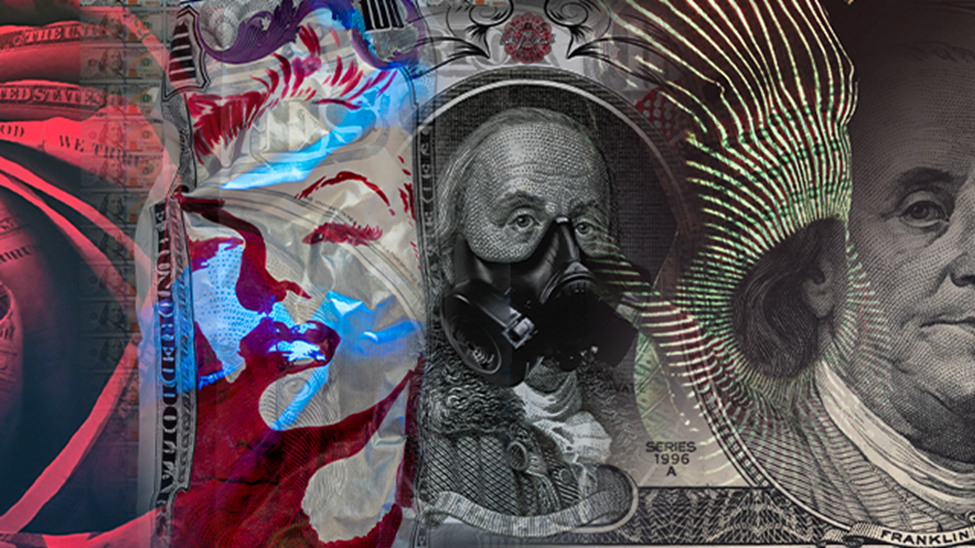
The lines between craftsmanship and art and currency and value can blur over time. Advertisements for fractional shares of artworks as an investment almost inexplicably make me angry on several levels. An expression of the soul isn’t meant to be fractionally owned on the slender hope that it can be profitably sold to some other jackass.
Fractional ownership is meant to be the mechanism by which entrepreneurs raise capital to fund productive new enterprises. And by productive, I mean companies that will generate a stream of positive earnings. However, Bloomberg highlights a research piece by Dan Su, a PhD from the University of Minnesota (linked at bottom). Here are a couple of links from the BBG piece:
New research shows that over the last five decades, the percentage of US firms trading publicly with zero earnings had more than tripled to more than half of the total market.
…the study measures characteristics tied to intangible assets – elevated customer-spending and R&D expenses – and plots them against loss-making firms. It finds a very high correlation between the two, suggesting most of these companies went public on the assumption their intangible assets will one day pay off in earnings.
And here’s the kicker:
“…if we focus on the business-cycle perspective, monetary policy is important for these companies’ market valuation as they cannot make positive profits until many years later.”
In many ways, there’s nothing earth shattering here: When there are no interest rates (or a hurdle-to-capitalism as Druckenmiller says) then “investments” based on thin reeds of hope tend to increase. As rates increase, all sorts of activities based on zero or low financing rates (to buy market share) no longer make sense. The gains on these intangible investments are counterfeit.
Here’s Brainard from a speech on Sept 1, 2020, commenting on the August ’20 change in the Fed’s policy framework: “This change implies that the Committee effectively will set monetary policy to minimize the welfare costs of shortfalls of employment from its maximum and not preemptively withdraw support based on a historically steeper Phillips curve that is not currently in evidence and inflation that is correspondingly much less likely to materialize.”
Here’s Brainard from a couple of weeks ago, May 25: “Price stability is of greatest importance for lower income families because they spend more than three-quarters of their paychecks on essentials like groceries, gas or bus fare, and rent – more than double the 31% spent by higher income households. High inflation is our most pressing challenge.”
The August change in framework had the overt goal of letting the inflation target surpass 2%, thereby reducing purchasing power of the dollar. That’s what increased inflation does, now belatedly recognized. The plan succeeded, in spades. In earlier sales pitches, FAIT was couched as a cost-free benefit for labor. There’s no free lunch.
On May 17, the Atlanta Fed GDP Now estimate for Q2 was 2.5%. It has steadily come down as data has filtered in. As of June 1 the estimate is 1.3%, with the next reading due on Tuesday.
Note that the most tangible input to the economy, oil, is near $120/bbl (WTI), within a stone’s throw of the 2008 record $140. German 2- and 10-year yields soared 30 bps this week (30.9 bps and 1.273%), the high since 2011 on the former and 2014 on the latter. XOM, once the most valuable listed company is near its all-time price high at 99.09, but now with a market cap of $417b, paling in comparison to big-cap techs. For now.
By the way, the US five-year led the US curve in terms of yield, rising 21.7 bps to 2.951%. I opened with an image of Paschke’s ‘Bondo’. The cash US 30y bond ended at a yield of 3.11%, and appears destined to soon test the recent high set on May 6 of 3.23%.
News highlights this week include:
Tuesday: Consumer Credit for April (typically not important but the March figure was an astonishing $52.4 billion). Expected $35b. Atl Fed GDPNow.
Thursday: ECB meeting, likely the last before rate hikes commence
Thursday: Z.1 report for Q1 which summarizes Net Worth and Debt Levels across the economy
Friday: CPI, expected 8.3% yoy and Core 5.9% from 6.2%
Auctions
Tuesday $44b 3-yr
Wednesday: $33b 10-yr re-open
Thursday: $19b 30-yr re-open With only $23b maturing in these maturities, these auctions raise $73b in new cash
| 5/27/2022 | 6/3/2022 | chg | ||
| UST 2Y | 249.6 | 266.7 | 17.1 | |
| UST 5Y | 273.4 | 295.1 | 21.7 | |
| UST 10Y | 274.7 | 295.5 | 20.8 | wi 296.5/296.0 |
| UST 30Y | 297.6 | 310.9 | 13.3 | wi 312.0/311.0 |
| GERM 2Y | 35.3 | 66.2 | 30.9 | |
| GERM 10Y | 96.3 | 127.3 | 31.0 | |
| JPN 30Y | 99.3 | 102.3 | 3.0 | |
| CHINA 10Y | 274.7 | 280.7 | 6.0 | |
| EURO$ U2/U3 | 59.0 | 72.0 | 13.0 | |
| EURO$ U3/U4 | -24.0 | -31.5 | -7.5 | |
| EURO$ U4/U5 | -8.5 | -8.0 | 0.5 | |
| EUR | 107.36 | 107.19 | -0.17 | |
| CRUDE (active) | 115.07 | 118.87 | 3.80 | |
| SPX | 4158.24 | 4108.54 | -49.70 | -1.2% |
| VIX | 25.72 | 24.79 | -0.93 | |
https://blinks.bloomberg.com/news/stories/RCZVRWBSWSG0
https://www.lamag.com/culturefiles/arthur-j-williams-davincis-gallery/
https://scholar.google.com/citations?user=PKHdMDUAAAAJ&hl=en
Super bad
June 6, 2022
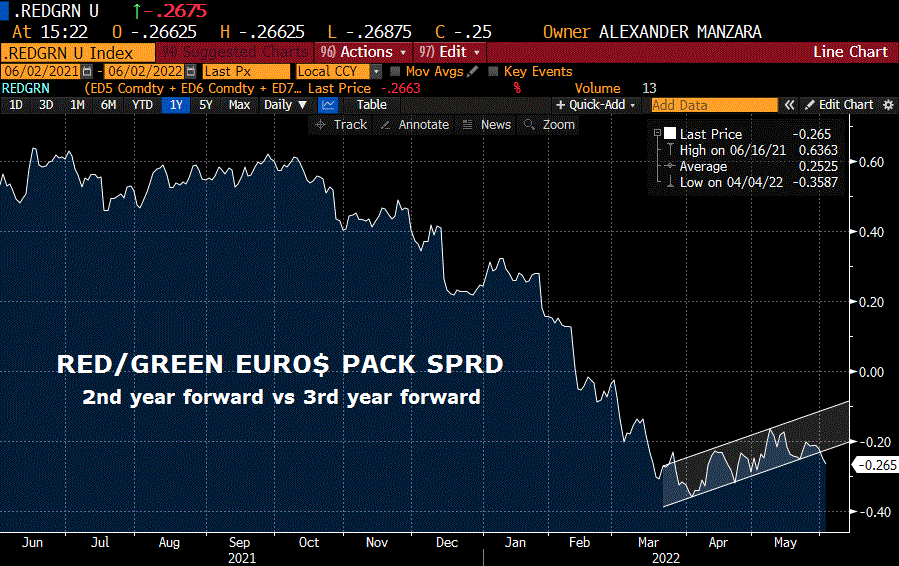
–Rates eased a bit with tens down 1.5 bps to 2.917%. On the eurodollar strip whites ended down 1, reds +2.25, greens and blues +4.0. Although ADP was much weaker than expected, printing 128k vs 300k expected, Vice Chair Brainard said that she sees no reason for a September “pause” as Bostic had floated. Killing inflation is still job one, and to curb inflation the Fed has to slow demand. What’s that mean? Higher rates on very near contracts and slightly lower rates in the future as the economy slows. According to a report citing RBC, US car sales in May were at an annualized rate of less than 13 million, a “recessionary level”. Clearly supply chain issues are part of the problem. In front of today’s jobs report Musk said he would like to cut 10% of Tesla’s workforce due to a “super bad feeling” about the economy. Other executives are also issuing warnings. Chart attached is red/green ED pack spread, which is reversing its recent grind higher, and is back to being inverted by more than ¼% (-26.75s).
–If the Fed were to hike 50 in June, July and Sept, then the FF rate would be 2.25-2.5% (around the neutral moving target). The following Fed meeting is Nov 2, and the midterm election (speaking of super bad) will be Nov 8. If there were to be a pause, November is meeting to circle. Oct/Nov FF spread settled 28.0 (9774.5/9746.5) so there is a bit more than one hike priced there. Those in the pause camp might consider selling this spread. Also worth noting, is that over the next year of 2023, just one 25 hike is priced; that is FFF3/FFF4 settled 21.5.
–NFP expected 323k from 428k. The unemployment rate is expected 3.5% from 3.6%. Just for context, since 1980 there have only been two months with the unemp rate at the record low of 3.5, and that’s the first two months before COVID in 2020.
–Implied vol was crushed. Fed’s going to handcuff the economy and perhaps US rates will go into a flattening torpor. On the other hand, ERM2/ERM3 closed yesterday at a new record of 190 bps, a sign of considerable uncertainty in Europe.
Front end pounded
June 2, 2022
-Yields jumped yesterday led by fives up 13 bps to 2.94%. The curve flattened with thirties up only 2.4 bps to 3.077%. On the euro$ curve the red pack closed down 17, greens -14.125, blues -11.625 and golds -8.375. ISM Mfg was solid at 56.1, though the employment component at 49.5 was the lowest since late 2020. Bank of Canada raised by 50 bps and signaled more to come with warnings about inflation expectations becoming entrenched (obviously highlights same problems confronting US). Bullard again laid out a case for more aggressive action by the Fed through year-end. With a bit over a week to go for June midcurve option expiration (10-June) the expiring red, green and blue atm straddles are 21, 20.5 and 19. Focusing on the weakest contract on the strip, EDM3 settled 9657 and the 0EM 9662.5^ at 21.0. That futures price is consistent with FF target of 3.0 – 3.25%. Again, note that EDM3/EDZ3 spread is -20 (9657 vs 9677) so the payoff for aggressive tightening now will be a much slower economy featuring a bias toward lower rates by the end of next year.
–The Atlanta Fed GDP Now is projecting 1.3% for Q2 down appreciably from the May 27 forecast of 1.9%.
–July WTI is nearing $112/bbl after having almost reached 120 earlier in the week. News reports about Biden going to Saudi Arabia to grovel for more supply. Econ news today includes ADP expected 300k, Productivity and Unit Labor Costs (11.6%), Jobless Claims at 210k, Factory Orders and Durables. Head of the NY Fed desk Lori Logan to speak at 11:00. Employment report tomorrow.
Quick note
June 1, 2022
–Yields ended Tuesday quite a bit higher than Friday, with tens up nearly 10 bps to 2.842% as Waller’s hawkish speech on Monday spilled over. End of the month trade was rather volatile, and indeed implied volatility firmed in treasuries on the move to higher yields.
–Today’s news includes Mfg ISM, expected 54.5 vs 55.4. Prices 80.5 vs 84.6. JOLTS expected 11.3m vs last month’s record 11.549. Williams and Bullard speak midday, with Beige Book at 1:00pm, one hour after Bullard.
–CLN2 (July WTI) hit a high just shy of $120 yesterday, but encountered a sharp pullback related to news that OPEC could supply more. However, it’s back at 116.20 this morning, with seemingly bearish news providing only a brief respite.
–One interesting late trade, SFRU2 9800/9825/9837.5c fly traded 2.0 vs 9766.5 late in the day. This has traded a couple of weeks ago for 3.25. Great trade for the idea of less than 50 in July and/or a September pause.
Running in circles
May 31, 2022
–A couple of clips from Waller’s speech on Monday:
No matter which measure is considered, however, headline inflation has come in above 4 percent for about a year and core inflation is not coming down enough to meet the Fed’s target anytime soon. Inflation this high affects everyone but is especially painful for lower- and middle-income households that spend a large share of their income on shelter, groceries, gasoline, and other necessities. It is the FOMC’s job to meet our price stability mandate and get inflation down, and we are determined to do so.
I support tightening policy by another 50 basis points for several meetings. In particular, I am not taking 50 basis-point hikes off the table until I see inflation coming down closer to our 2 percent target. And, by the end of this year, I support having the policy rate at a level above neutral so that it is reducing demand for products and labor, bringing it more in line with supply and thus helping rein in inflation.
My plan for rate hikes is roughly in line with the expectations of financial markets. As seen in slide 1, federal funds futures are pricing in roughly 50 basis point hikes at the FOMC’s next two meetings and expecting the year-end policy rate to be around 2.65 percent.
https://www.federalreserve.gov/newsevents/speech/waller20220530a.htm
–Fed officials, and Waller is no exception, talk about inflation as if all prices and wages rise and fall together. That’s stupid. The hand-wringing about the lower income households feeling the most pain is true…primarily because of energy and food costs. Stifling demand for other goods, and thus labor and wages doesn’t mean that energy and food costs will come down. In other words, the Fed may accomplish ACCENTUATING the pain on the lower-income segment of the population. Look, if 2.65% is neutral (and right now it’s nowhere close to neutral) then food and energy would already be coming down, because SFRZ2 at 9732.5 is already at 2.675. But WTI and beans are both making new highs. Get a mitt.
–When all else fails, trot out the models. Which is what Waller does at the end of the piece in an attempt to show that the Fed won’t harm labor markets. “…REDUCING DEMAND FOR PRODUCTS AND LABOR” right from the speech. So, inflation crushes lower income segment, food and energy are the biggest culprits, and now Biden is having Powell over at the WH for a discussion, while the administration is blocking domestic US energy production. It’s all a bit circular… July WTI (CLN2) at a new contract high above 119 this morning. Maybe the answer is to drain the SPR and cancel student debt.
Taking the jolt out of JOLTS
May 29, 2022 -weekly comment
**********************************
Powell constantly talks about how strong the labor market is. A Fed goal is to curtail that strength. Here’s a snippet from Powell at the May press conference:
“There are 1.9 vacancies for every unemployed person, 11.5 million vacancies [JOLTS out on Wed] 6 million unemployed people. So we haven’t been in that place on the vacancy, sort of the vacancy/unemployed curve, the Beveridge curve. We haven’t been at that sort of a ratio in the modern era. So in principle, it seems as though by moderating demand, we could see vacancies come down and, as a result – and they could come down fairly significantly, and I think, put supply and demand at least closer together than they are. And that would give us a chance to get inflation down, get wages down, and then get inflation down without having to slow the economy and have a recession and have unemployment rise materially.”
That’s a heck of an opening. We want to get demand down without slowing the economy. Huh?
Here’s a clip from the minutes of that meeting:
Viewed over a longer time horizon, financial conditions, as measured by many financial conditions indexes, had tightened by historically large amounts since the beginning of the year.
Market- and survey-based measures of U.S. inflation expectations continued to project a significant deceleration in inflation in the coming years. Nonetheless, far-forward inflation compensation rose over the period, and market participants remained attentive to the risk that, in bringing inflation back to 2 percent, the Committee would need to tighten by more than currently expected.
I saw several recent articles noting employment deceleration including a May 9 CNBC piece highlighting an email from CEO Khosrowshahi that said UBER will now “…treat hiring as a privilege and be deliberate about when and where we add headcount.” Another story on BBG says MSFT “…will slow hiring in its Windows and Office divisions as well as the Teams chat and conferencing software groups.”
There’s a piece by Piper Sandler featured on ZeroHedge which outlines many more job cuts, with this summary. (link at bottom)
Here are the stunning implications according to Piper Sandler:
- We could see a million layoffs or more, as many goods sectors that benefited from the pandemic now realize they added too much capacity (as involuntary admissions make clear).
- Low-income workers – who enjoyed the hottest wage gains during the crisis – are now most at risk of layoffs, with remaining job holders to see much slower wage growth.
- Payrolls gains are poised to downshift to just 100k/month on average in the second half of the year, from about 515k/month through April.
Obviously a lot of stimulus-induced hiring occurred on the pretext of buying market share and hopefully growing into profitability. The ‘historically large’ amount of tightening in financial conditions has created an abrupt halt in the largesse of capital markets, and with it, a change in the jobs outlook. The employment report is Friday, with NFP expected 325k. ISM Mfg and JOLTS on Wednesday. Waller speaks Monday, Bullard on Wednesday and Mester on Thursday. Next FOMC is June 15, in two and a half weeks.
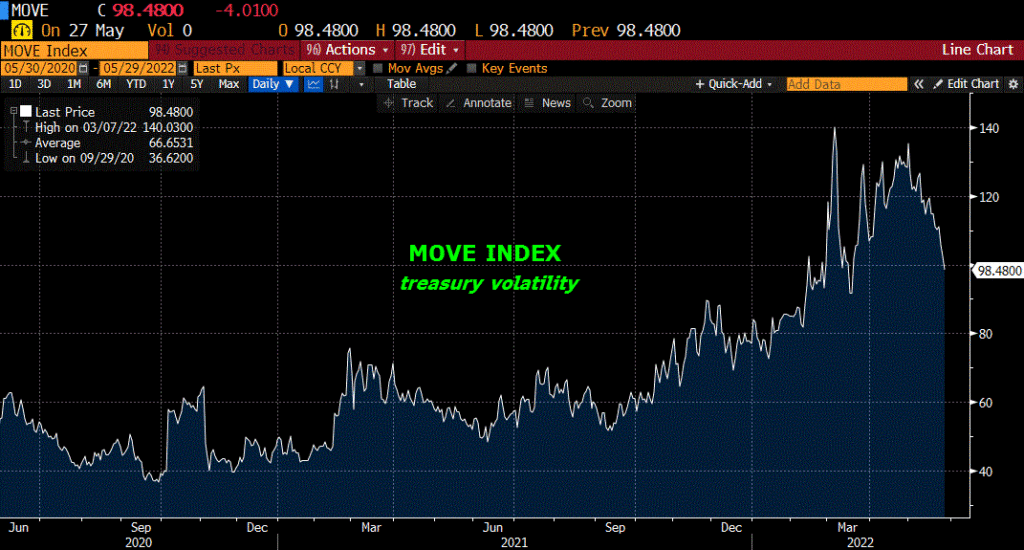
Financial conditions have actually eased somewhat In the past couple of weeks. The low settle in EDM3 was 9634.5 on May 3 and it settled 9682.5 on Friday, a change of nearly 50 bps. Tens topped at 3.13% on May 6 and on Friday ended at 2.74%. The dollar index topped May 12 at 104.85 versus 101.67 on Friday. SPX belatedly followed fx and rate signals, and had a nice bounce off the 20% pullback. (Halfway back from the year’s range is 4315; Friday’s close was 4158). The muni market thawed; a BBG story noted: Muni Mkt Posts ‘Stunning 180’ in Biggest Rally Since 2020. Hi-yield HYG and JNK etfs exploded higher. Implied vol in treasuries is falling.
Bostic floated the idea of a September “pause’ in rate hikes. Bullard opened the prospect of cutting rates in 2023 or 2024 if inflation is brought under control.
The problem of course, is that food and energy prices continue to rise, another major factor crimping demand for other goods and services. For example, July Soybeans and WTI (CLN2) both settled at new contract highs, 1732 ¼ and 115.07. In any case, EDM3 has been the lowest priced contract (highest yield) on the strip for quite some time. The same is true on the SOFR curve with SFRM3. However, last week, EDH3/EDM3 spread had a low settle of 0.5 and SFRH3/M3 actually settled zero on Wednesday and Thursday. By Friday, these spreads were +2.5 and +2.0. The point is that the market is slowly adjusting the timetable for the end of Fed hikes closer in time…more like Q1 of next year rather than Q2. That is, we are close to seeing March’23 contracts take over as the lowest priced on the strips, with deferred contracts leaning toward an ease in policy. In fact, FFQ2 (August Fed Fund contract) settled 9819.0 or 1.81%, just a whisper below the generally accepted idea of two 50 bp hikes in June and July (which would put the Fed Effective rate at 1.83%).
The question now is whether supply issues continue to dominate — with attendant price increases, or whether the Fed’s impending hikes will sap demand enough to stifle employment and inflation. The market is beginning to lean toward the latter outcome, which will tend to steepen the curve, but probably will NOT provide a continued tailwind for risk asset prices. The former scenario is arguably more difficult for the Fed, because rising energy prices act as a tax on the economy while also being inflationary. How would the Fed react to a negative payroll print with concurrent new highs in oil?
| 5/20/2022 | 5/27/2022 | chg | ||
| UST 2Y | 262.0 | 249.6 | -12.4 | |
| UST 5Y | 280.3 | 273.4 | -6.9 | |
| UST 10Y | 278.1 | 274.7 | -3.4 | |
| UST 30Y | 299.2 | 297.6 | -1.6 | |
| GERM 2Y | 34.2 | 35.3 | 1.1 | |
| GERM 10Y | 94.4 | 96.3 | 1.9 | |
| JPN 30Y | 98.9 | 99.3 | 0.4 | |
| CHINA 10Y | 281.9 | 274.7 | -7.2 | |
| EURO$ M2/M3 | 149.0 | 141.3 | -7.8 | |
| EURO$ M3/M4 | -41.5 | -29.0 | 12.5 | |
| EURO$ M4/M5 | -6.5 | -10.5 | -4.0 | |
| EUR | 105.63 | 107.36 | 1.73 | |
| CRUDE (active) | 110.28 | 115.07 | 4.79 | |
| SPX | 3901.36 | 4158.24 | 256.88 | 6.6% |
| VIX | 29.43 | 25.72 | -3.71 | |
https://www.cnbc.com/2022/05/09/uber-to-cut-down-on-costs-treat-hiring-as-a-privilege-ceo-email.html
https://www.zerohedge.com/markets/we-could-see-million-layoffs-or-more-here-comes-job-market-shock
The oil “wrecking ball”
May 27, 2022
–July WTI crude settled at a new high for the move at 114.09, and printed a high of 114.99 this morning. The previous high settle was March 8 at 110.83. The Adventures in Capitalism blog posed an interesting question: How will the Fed respond if oil marches much higher into the end of the year? Especially if this summer’s additional rate increases slow both employment growth and the economy in general. The Fed’s goal in hiking is to deter demand; they’ve said it many times. But that might not stop oil prices, which are facing supply constraints due to both Russia and the US fight against fossil fuels. Certainly high energy prices act as a tax on the economy, but are also inflationary. My guess: they will just slow the pace of hikes but maintain a tightening bias.
https://adventuresincapitalism.com/2022/05/26/the-fed-is-fuct-part-2/
–Rates were little changed yesterday and implied vol continued to seep a bit lower. Tens up 1 bp to 2.754%. Large buying yesterday of essentially the same trade in ED and SFR: +25k EDU2 9775/9800/9812.5 broken call fly for 3.5 and +SFRU2 9800/9825/9837.5c fly for 3.25 in smaller size. If the Fed hikes 50 and 50 June and July and stops, EFFR will be 183 bps…both of these would probably be in-the-money. If the Fed is forced to stop earlier, then underlying contracts could conceivably rip through upper strikes and both still make 9. (Both the lower 25 bp cs and the upper 12.5 cs fill out, 25-12.5=12.5 less the initial premium paid).
–Today’s news includes the Fed’s preferred inflation measure PCE Core prices, expected 4.9 to 5.0 from 5.2%. U of Mich inflation expectations as well (final for May).
–One last note, EDM2 settled 9823 and the 9825^ settled 5.5 with 17 calendar days left and 12 libor settings. Three-mo libor set yesterday at 1.57486, so there’s 19.5 bps of convergence. Obviously the straddle level indicates that the libor settings will ratchet higher every day, however, a change in perception on another 50 in July could still prompt a settle in EDM2 above the 9825 strike. Very roughly, the July 27 FOMC is about halfway through the three month period priced by EDM2. Therefore a 50 bp hike at that meeting is “worth” about 25 bps to the period. What if the market suddenly shifts to the idea of the Fed only hiking 25 in July? FFQ2 settled 9918 (or 182 bps), the first baby-step in acknowledging this possibility.